

LocationSouthernmost atoll of the Maldives, just south of the Equator
Southern Maldives · UNESCO Biosphere Reserve
Addu City, Maldives
Discover the Maldives beyond the resorts — where local island life, nature, diving, history and adventure come together.
At the southern edge of the archipelago, Addu pairs an international airport with road-connected island communities, a protected wetland landscape and a lagoon shaped by reefs and channels.
Experience the Maldives beyond the resort
A living island destination, not just a place to sleep.
Addu gives travellers something unusual in the Maldives: the ability to combine reef and lagoon experiences with sizeable inhabited islands, roads, neighbourhood cafés, wetlands, historic sites and everyday Maldivian life.
It works particularly well as a stand-alone southern journey or as a contrasting second chapter after a private-island resort stay.
GatewayGan International Airport (GAN)
From MaléAbout 70–95 minutes by domestic flight; schedules vary
Known forDiving, wetlands, local island life, cycling and British-era history
ExploreHithadhoo, Maradhoo, Maradhoo-Feydhoo, Feydhoo, Gan and eastern Addu
Suggested stay5–6 days for a balanced first visit
Things to do in Addu
Build your days around ocean, nature and island life.
Discover experiences that bring together Addu’s ocean, nature, culture and island life.
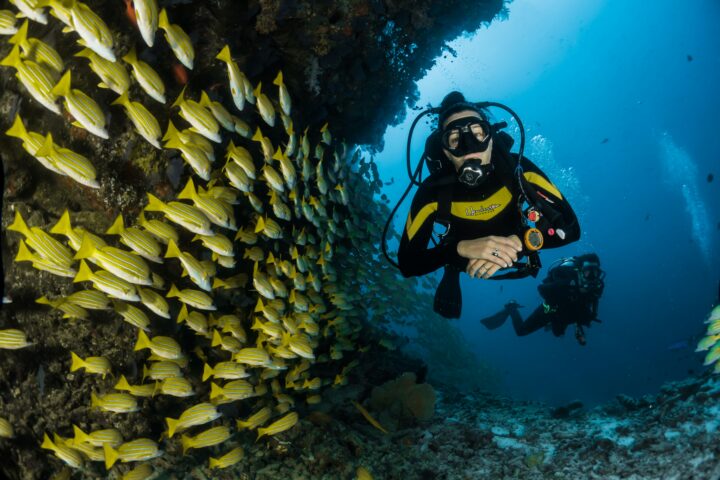
Diving
Explore Addu's southern reefs, channels, manta cleaning areas and the historic British Loyalty wreck.
Explore Diving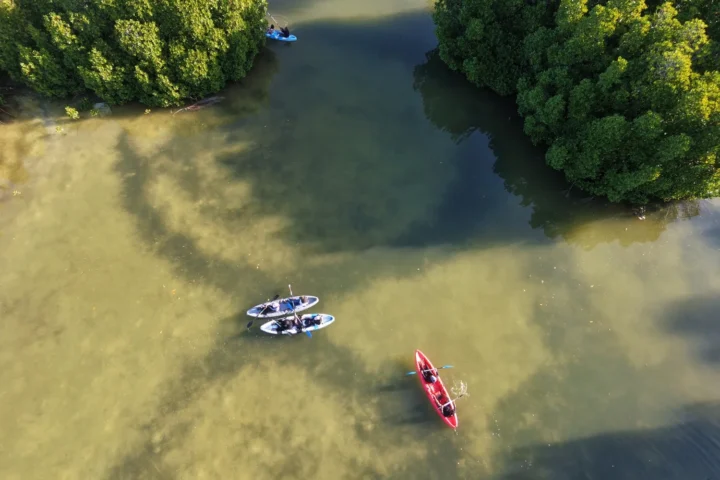
Nature Trip
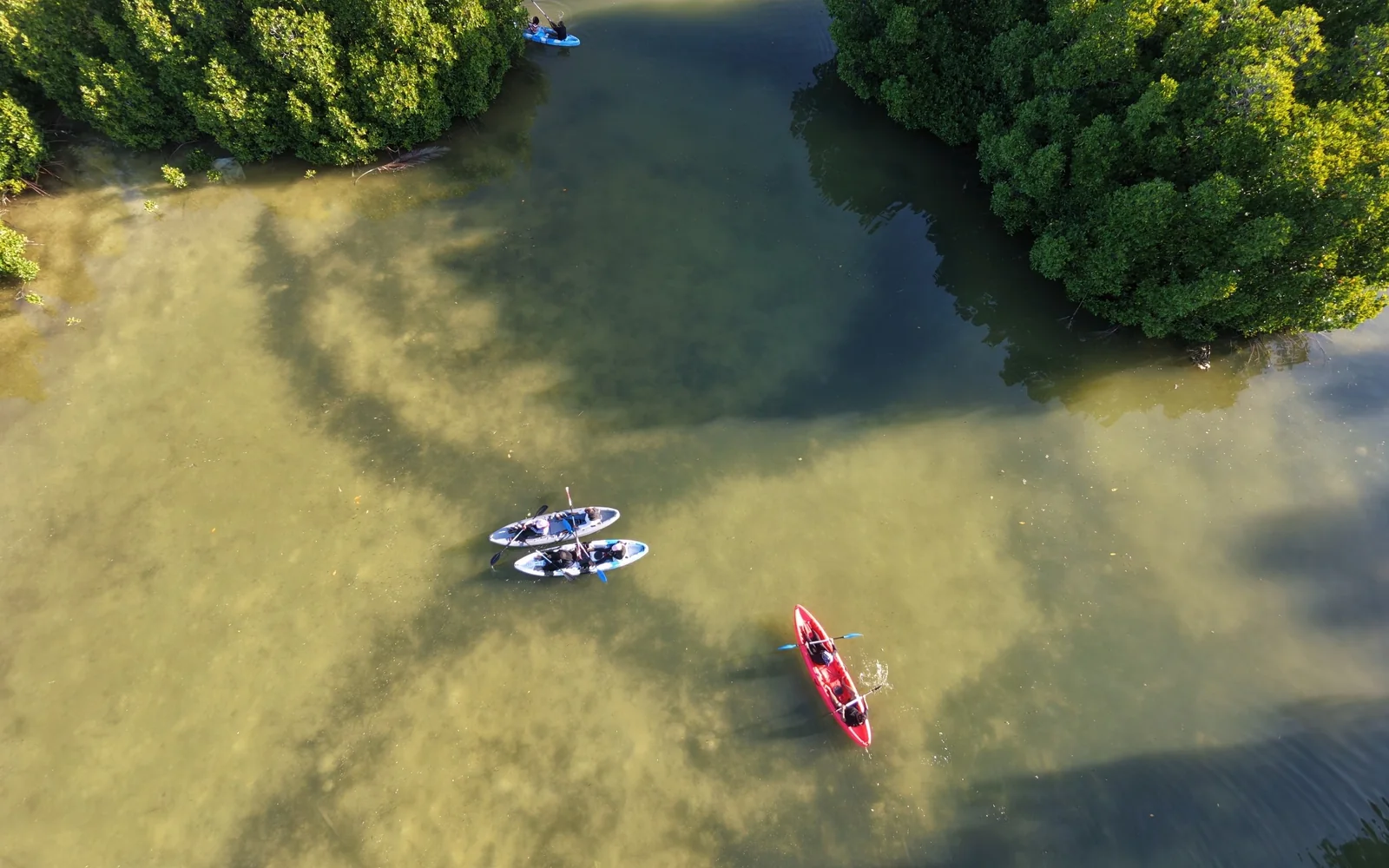
Discover Addu City’s greener side on a journey through lakesides, mangroves and lush island landscapes.
Explore Nature Trip
Snorkeling Boat Trip
Cruise out to a nearby reef and discover the colourful marine world beneath the clear waters of the Maldives.
Explore Snorkeling Boat Trip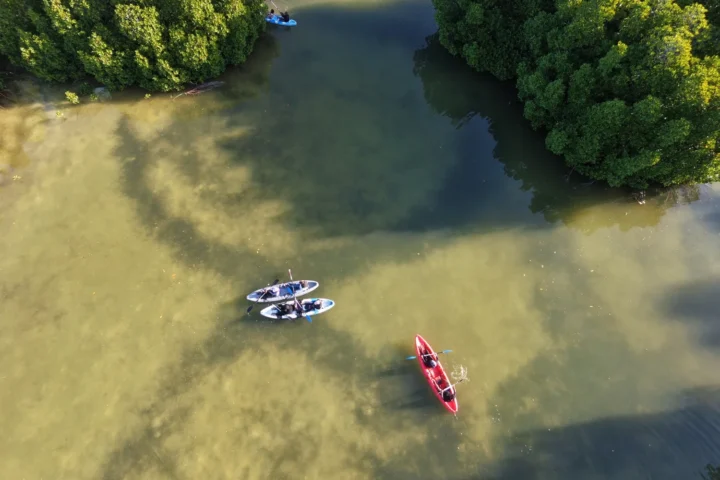
Mangrove Canoe Trip
Glide through the calm mangrove waterways of Hithadhoo Protected Area and experience one of Addu City’s most peaceful natural environments.
Explore Mangrove Canoe Trip
Sunset & Dolphin Cruise
Cruise Addu's southern waters at sunset, with the chance to encounter dolphins along the way.
Explore Sunset & Dolphin Cruise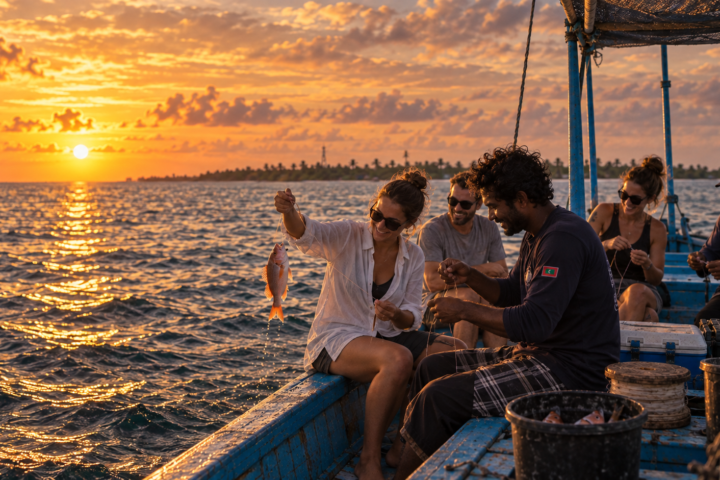
Sunset Fishing & BBQ
Spend the evening hand-line fishing on Addu's waters, followed by a relaxed BBQ dinner.
Explore Sunset Fishing & BBQ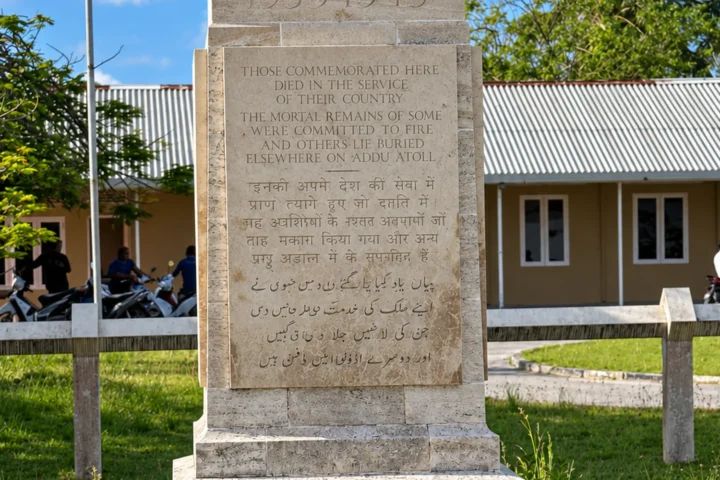
Addu Tour by Car – Hithadhoo to Gan
Travel across Addu City’s connected islands to discover local life, scenic causeways and the remarkable history of Gan.
Explore Addu Tour by Car – Hithadhoo to Gan
Island & Village Hopping
Combine local island life with an uninhabited-island escape as you discover Hulhudhoo, Meedhoo and Mulikede in the Southern Maldives.
Explore Island & Village Hopping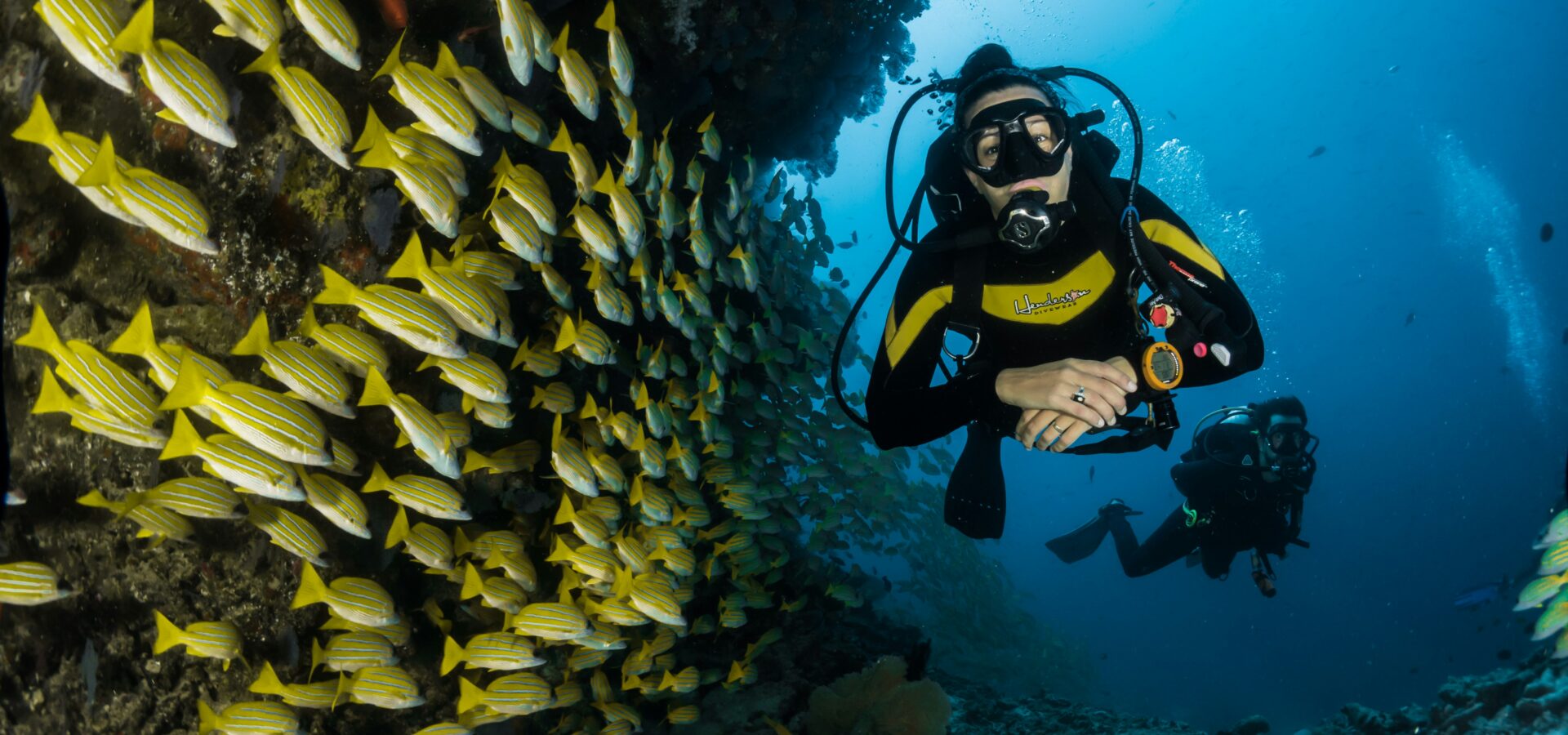
Diving & marine life
Reefs, channels, mantas and a historic wreck.
Addu’s diving landscape has a distinctly southern character: outer reefs, ocean-facing channels, manta cleaning areas and the historic British Loyalty wreck are all part of the same atoll. Conditions vary from site to site, giving divers a mix of gentler reef dives and more demanding current, deeper and wreck profiles.
British LoyaltyA protected 140-metre oil-tanker wreck resting at about 33 metres between Maradhoo and Hithadhoo.
Reef manta raysManta cleaning areas are a signature attraction, with encounters reported across the year. Dive plans are shaped around local conditions and activity at the known cleaning areas.
Reef & pelagic lifeGrey reef sharks, whitetip reef sharks, eagle rays, turtles, jacks and other reef fish can be encountered depending on site and conditions.
Experience levelsAddu includes accessible reef dives as well as current, deeper and wreck dives that may require advanced certification or greater experience.
Addu's reefs and channels create a varied underwater landscape, with visibility, current and marine activity changing from site to site.
Explore Diving in Addu
Nature & wildlife
Wetlands, mangroves and reefs in one biosphere landscape.
UNESCO designated Addu Atoll a Biosphere Reserve in 2020. Its ecosystem includes coral reefs, wetlands, mangroves, freshwater ponds and brackish lakes.
Addu Nature Park
Explore the protected Eydhigali Kilhi and Koattey area in Hithadhoo, with wetlands, mangroves and coastal habitats.
Wetland birdlife
Herons, egrets and Maldivian pond herons are among the waterbirds recorded around the protected wetlands.
Koattey & reef edge
Koattey adds a marine dimension with reef habitat where snorkellers may encounter fish, turtles and reef sharks.
Responsible encounters
Keep distance from wildlife, do not touch coral or marine animals, use reef-safe practices and follow local protected-area guidance.
Getting to Addu City
Fly into Gan, then travel by road or across the lagoon.
Gan International Airport (GAN) is the main air gateway to Addu. Most international visitors connect through Malé, usually with a domestic flight onward to Gan. Direct international connections can also be available on selected dates, including Colombo–Gan. Check schedules for your travel dates before building the trip around a direct service. Once you land, the western communities are linked by road and causeways, while Hulhudhoo and Meedhoo are reached across the lagoon by ferry or arranged speedboat.
International originFly to Malé (MLE) or a current direct gateway serving Gan.
→
Gan (GAN)Domestic MLE–GAN flights are the standard connection; Colombo–Gan can be available directly.
→
Western AdduGan, Feydhoo, Maradhoo-Feydhoo, Maradhoo and Hithadhoo are linked by road and causeways.
→
Eastern AdduHulhudhoo and Meedhoo require a scheduled or arranged marine transfer.
Islands & communities of Addu
One atoll, several very different perspectives.
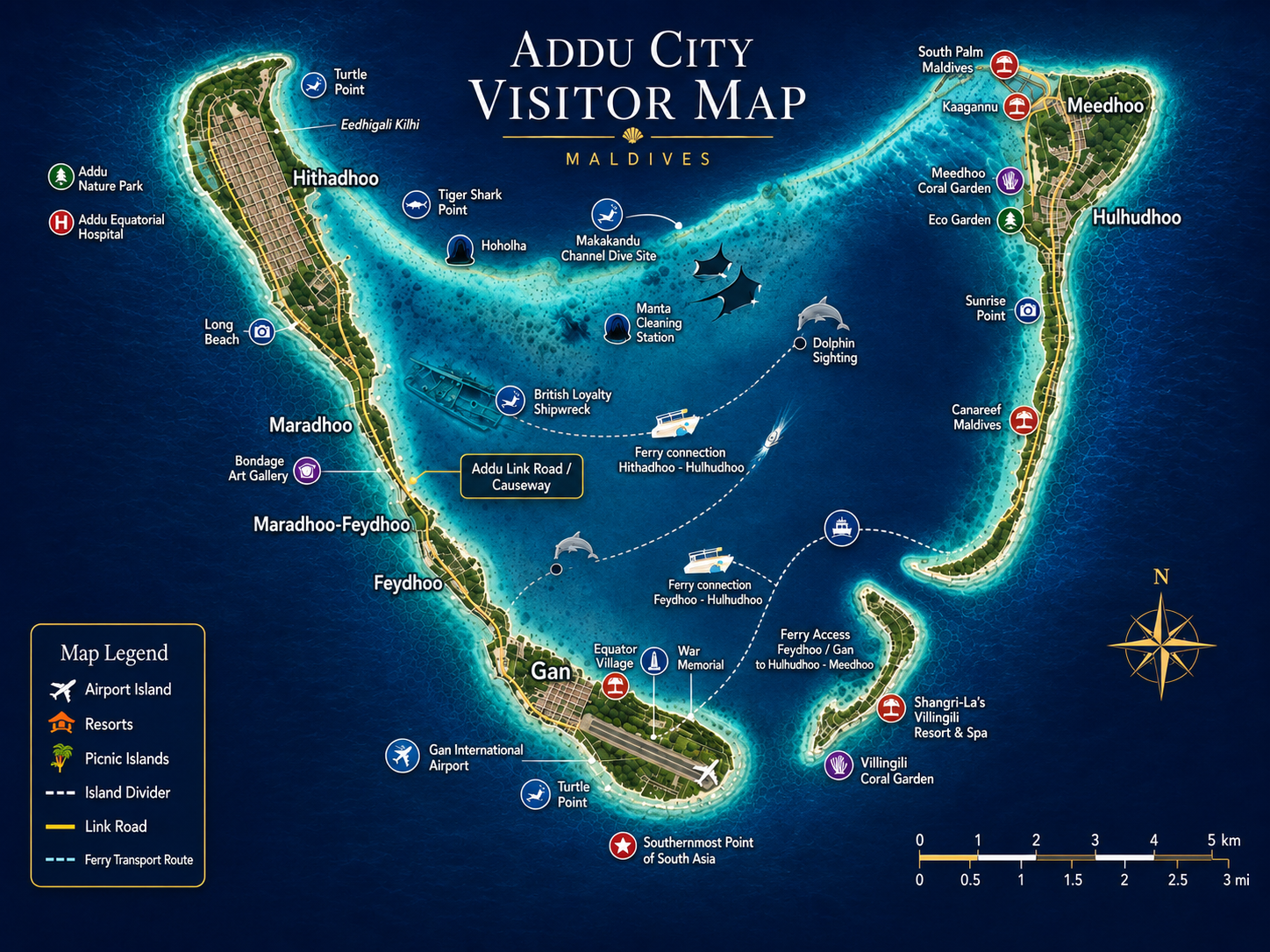
The western corridor can be explored by road, while the eastern communities sit across the lagoon. Use the visitor map below to understand the main islands, causeways, ferry routes and key points of interest.
Hithadhoo
The main urban centre of the western island chain and the base for Addu Nature Park, Eydhigali Kilhi and Koattey. A practical place for cafés, shops, local stays and cycling.
Maradhoo
A road-connected community on the western side of the lagoon, close to the waters around the British Loyalty wreck and well placed for exploring the causeway corridor.
Maradhoo-Feydhoo
A compact residential community between Maradhoo and Feydhoo, offering a close-up view of everyday island life along the linked western corridor.
Feydhoo
Immediately north of Gan and convenient for airport access, local dining, shops and onward road or marine transfers within the atoll.
Gan
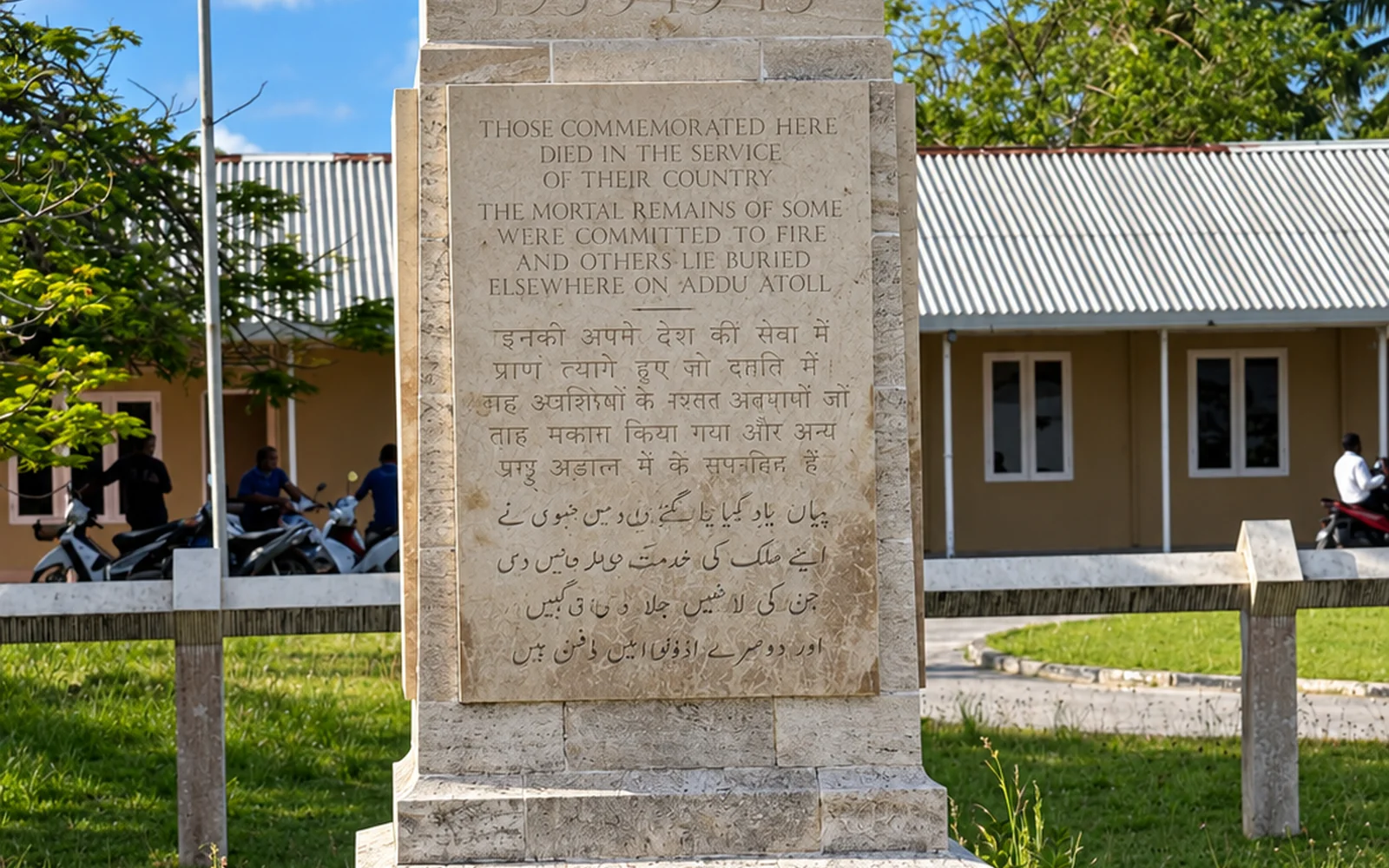
Home to Gan International Airport and the strongest visible legacy of the British military era, including sites associated with the former RAF staging post.
Hulhudhoo & Meedhoo
The adjoining eastern communities commonly associated with Hulhumeedhoo offer village streets, local heritage and a different perspective across the lagoon from the western causeway chain.
History & British presence
A strategic lagoon with a visible wartime legacy.
During the Second World War the British developed a defended naval anchorage in Addu known as Port T. Royal Navy records from November 1941 describe the atoll as a defended port whose existence was to remain secret.
In the post-war period, Gan became an RAF staging post on Britain’s long-distance transport network. The RAF Museum records that RAF Gan operated as a key staging post from the late 1950s until it closed on 1 April 1976.
Today, parts of Gan still carry this layered history in its road pattern, former military infrastructure and memorials. Offshore, the British Loyalty wreck turns that history into one of Addu’s signature dive experiences.
British Loyalty, a WWII-era oil tanker resting between Maradhoo and Hithadhoo, is one of Addu's most distinctive wreck dives. After sustaining wartime damage, the vessel was scuttled in 1946; its wreck site has been protected since 2018 and now forms part of the atoll's underwater heritage.
Plan your visit
Plan your Addu trip with confidence.
Open the sections you need while planning. You can keep several topics open at once and return to them as your itinerary takes shape.
Why visit Addu?
Visit Addu when you want the Maldives to feel like a destination rather than only a resort stay. Its strongest combination is local life, road-based exploration, reefs, protected wetlands, diving and twentieth-century history. It is particularly compelling as a contrasting extension to a northern or central Maldives resort.
Gan International Airport
Gan International Airport sits on Gan Island at the southern end of the western island chain. Gan is linked by causeways and roads to Feydhoo, Maradhoo, Maradhoo-Feydhoo and Hithadhoo, giving arriving travellers an overland transfer experience unusual in the Maldives.
Local culture & lifestyle
Addu’s inhabited communities have neighbourhood streets, family homes, mosques, small shops, cafés, schools, harbours and gardens. Visitors should dress respectfully away from designated tourist beaches, ask permission before photographing people, and follow local guidance around religious and community spaces.
Cycling is an especially good way to see the western corridor at a human pace: stop for tea, explore the coastline and notice how daily life changes from one district to the next.
Food & local dining
Southern cooking is an important part of the Addu experience. Local specialities include Addu Havaadhu, a distinctive spice blend used in curries, and Addu Bondi/Bendi, a coconut-based sweet. Tuna, coconut, chilli and locally grown produce appear throughout Maldivian cuisine. Travellers can mix hotel dining with cafés and local restaurants rather than eating every meal inside one resort.
Money & payments
Cards are useful at hotels and many established businesses, but smaller cafés, shops and local services may be easier with cash. Keep a modest amount of Maldivian rufiyaa for everyday purchases and confirm payment methods before relying on a single option.
SIM & connectivity
Mobile data is widely used in the Maldives, including inhabited islands, while Wi-Fi quality depends on the property. If you need reliable connectivity for work or navigation, arrange a local SIM or eSIM option and check coverage requirements before travelling.
What to pack
Pack light clothing for a warm tropical climate, strong sun protection, comfortable footwear for cycling or walking, and a light rain layer. On inhabited islands, bring clothing that covers shoulders and knees for community areas, plus suitable swimwear for designated tourist beaches and excursions.
Beaches, lagoons & snorkelling
Addu offers lagoon edges, reef access and beach areas across the atoll, but conditions and permitted swim zones differ by location. Guided snorkelling trips can reach coral habitat and marine-life areas more effectively than assuming every shoreline is a house reef. On inhabited islands, use designated bikini beaches or follow local dress requirements.
Water sports, fishing & dolphin experiences
Fishing, dolphin cruises and other water-based excursions can be part of an Addu stay. Availability changes with weather, sea conditions and operator schedules. Dolphin encounters depend on natural conditions; responsible operators plan around the weather and sea state while avoiding chasing or crowding animals.
Browse current experiencesBest time to visit
Addu is warm and humid year-round. The Maldives Meteorological Service defines the southwest monsoon, typically mid-May to November, as the wetter season; January to March is the core northeast-monsoon dry season, with December and April transitional. Southern Maldives receives more annual rainfall than northern Maldives, usually in showers with sunny periods between.
For diving, January to April often offers calmer seasonal conditions, but useful diving is possible year-round and individual sites depend on wind, swell, current and visibility. Wildlife activity follows natural conditions and varies by site and season.
How many days?
3–4 daysHighlights: one nature day, one ocean/diving day and a road-based island/heritage tour.
5–6 daysBest first-visit balance: nature, local life, diving or snorkelling, history, fishing/dolphins and downtime.
7+ daysBest for repeat divers, slow travellers, longer local stays or combining western Addu with eastern communities.
Getting around
The western chain is unusually easy to explore overland by taxi, car, scooter or bicycle because Gan, Feydhoo, Maradhoo, Maradhoo-Feydhoo and Hithadhoo are linked. Travel to Hulhudhoo and Meedhoo crosses the lagoon and should be planned around the current ferry or speedboat arrangement.
Shopping & everyday experiences
Addu is better approached for everyday local shopping than luxury retail. Look for neighbourhood shops, cafés, supermarkets and locally available food products. For souvenirs or crafts, choose items whose origin is clear and avoid coral, shells or wildlife products that may be environmentally harmful or restricted.
Where to stay
Choose Hithadhoo or the western corridor for easy road access to communities and Nature Park excursions, Gan/Feydhoo for airport convenience, or a resort/other island setting when your priority is a more self-contained beach holiday. Use the accommodation section below to compare the stays currently shown for Addu.
Responsible travel
Addu’s natural and cultural value depends on low-impact tourism. Do not touch or stand on coral, keep a respectful distance from mantas, sharks, turtles and dolphins, reduce single-use plastic, follow protected-area rules and dress appropriately in inhabited communities. Choose qualified dive professionals and follow site-specific safety briefings.
Who should visit Addu?
Match the destination to your travel style.
Divers
A strong fit for travellers who want southern reef, channel and wreck diving, with manta rays and other marine life possible depending on conditions.
Adventure travellers
Combine cycling, island exploration, water activities, mangroves, snorkelling, fishing and time on the lagoon.
Couples
A quieter Maldives itinerary with sunsets, local dining, beaches and active days rather than a resort-only routine.
Families
Road-connected communities, beaches, nature and flexible excursions can work well for families when activities are matched to children’s ages.
Nature lovers
Wetlands, mangroves, reef systems, birdlife and protected areas add a terrestrial nature dimension uncommon in many Maldives itineraries.
Cultural travellers
Stay close to everyday island communities, local cafés, shops, mosques, neighbourhood streets and southern food traditions.
Value-focused travellers
Local hotels and guesthouses can broaden the accommodation budget range compared with many private-island stays; total trip cost still depends on flights and activities.
Slow & long-stay travellers
The atoll rewards travellers who want time to cycle, dive repeatedly, explore communities and mix active days with unhurried local life.
Where to stay
Stay close to the Addu you want to explore.
Choose from the Addu stays currently available on Travio. Where a current rate is shown, use it as a starting point; otherwise request the latest rate and availability for your dates.
 Guesthouses
Lagoon Lodge
SBFT Magu, Hithadhoo, Addu City, Maldives
Located along the seaside in Hithadhoo, Lagoon Lodge offers 12 cozy, spacious rooms with balconies and fresh sea breeze from the Indian Ocean. The…
 Guesthouses
Abuharee Grand
Hithadhoo, Addu City, Maldives
Located in Hithadhoo, Addu City, Abuharee Grand offers comfortable accommodation for travelers looking to experience authentic Maldivian island life. Enjoy modern rooms, swimming pool…
Explore Addu with Travio
Discover an Addu journey designed around more than the beach.
Explore a package that brings together island life, nature, marine experiences and time to unwind in the southern Maldives.
Addu packages are being prepared.
You can still ask us to combine a stay and experiences into a custom itinerary.
Ready to discover Addu City?
Turn the destination guide into your journey.
Tell us your dates and what you want from the trip. We’ll help bring the stay, activities and practical details together.